
Inspecting your property after a storm can feel daunting, especially when you’re unsure what to look for or how to document it. The good news? A step-by-step plan makes the process easier and ensures you don’t miss anything important.
Whether you’re dealing with wind, hail or storm damage, detailed documentation is the foundation of every successful insurance claim. This guide walks you through conducting a thorough post-storm inspection, including what to document, how to capture claim-winning evidence and which signs of damage are easy to overlook.
Why You Must Document Everything
From your insurance company’s perspective, undocumented damage doesn’t exist. If you can’t prove it happened during the storm, your insurer may reduce or deny your claim.
Insurance adjusters review claims and make decisions based on the evidence you provide. The more thorough and organized your documentation is, the stronger your position in negotiations. Your goal is to create a visual and written record that proves the extent of your losses and supports every dollar of your claim.
Your Documentation Toolkit
Gather these simple tools before you start inspecting your home.
- Smartphone camera: Current phones take high-quality photos and videos that insurance companies accept as evidence.
- Flashlight: Inspect areas where water damage often hides, such as attics, basements and crawl spaces.
- Notebook and pen: Write down details that photos might not capture, such as unusual odors or dripping water sounds.
- Protective gloves: While inspecting damaged areas, wear gloves to avoid injuries when moving debris.
Distinguish New From Existing Damage
Your insurance only covers the damage caused by the storm, not existing conditions. Learning the difference prevents claim disputes.
New damage is easy to spot. For example, a foundation crack is new if it’s clean with sharp edges, whereas an old crack has dirt buildup or signs of a previous seal. Recently broken shingles show bright, unexposed material underneath, while weathered ones will have noticeable fading.
If you’re unsure whether the damage is new, document it anyway. Your public adjuster or insurance company can determine its age during their official inspection.
Take Claim-Winning Photos and Videos
Low-quality photos and videos can undermine your claim. Follow these documentation best practices.
- Document before cleanup: Take photos and videos before moving anything. Insurance companies need to see damage in its original state.
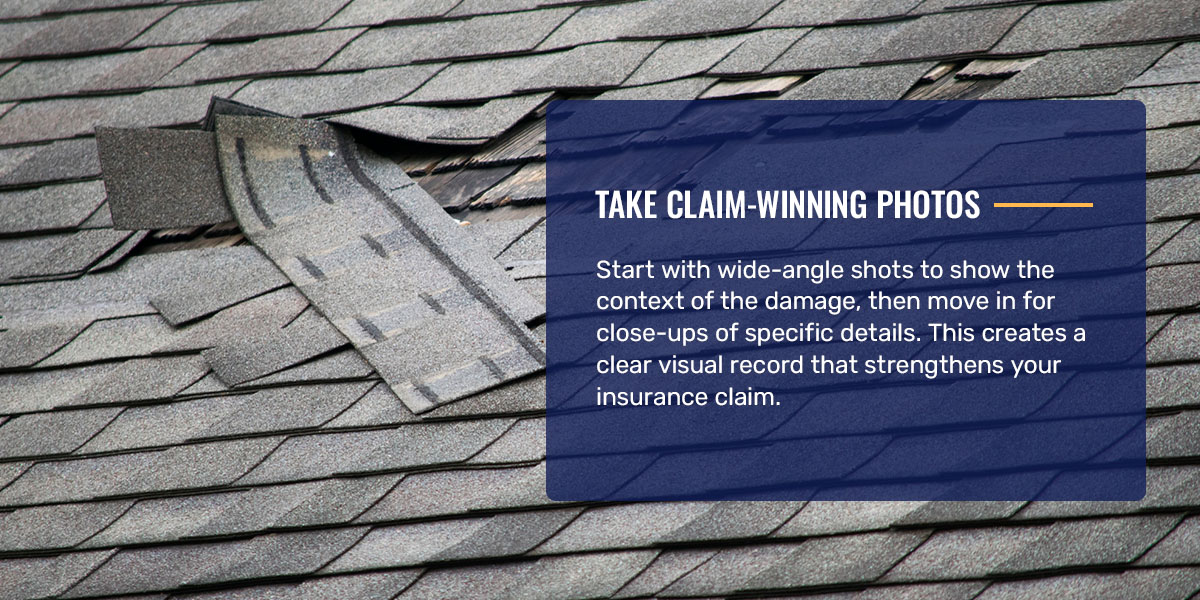
- Take detailed shots: Start with wide-angle shots showing the context of the damage, then take close-ups of specific details.
- Photograph identifying information: Document serial numbers and model information for appliances or equipment damaged by the storm.
Your Storm Damage Inspection Checklist
A step-by-step approach to a storm damage inspection ensures you don’t miss critical damage. Work through each area and be meticulous, using your documentation toolkit as you go.
Check Siding, Windows and Doors
Walk your home’s perimeter and check your siding for cracks, chips, dents or holes. Even small punctures can allow water infiltration. Pay special attention to areas where siding meets corners, trim or other materials, as these seams are vulnerable to impact and wind damage.
Windows and doors take the brunt of severe weather. Inspect each window for cracked or broken glass and check frames for damage. Broken seals appear as condensation between double-paned glass. Test each door to confirm it opens and closes properly. Warping from water exposure can prevent proper sealing, leading to energy loss and water intrusion.
Also, check storm and screen doors and document bent frames or torn screens.
Inspect Roof and Gutters
A roof inspection after a storm is nonnegotiable. Since your roof protects everything inside your home, damage to it can lead to extensive interior problems that will worsen if you don’t address them. Roof repairs often account for the largest share of storm damage claims.
For safety, complete your inspection from the ground using binoculars or a drone with a camera. If you notice significant roof damage, document it thoroughly.
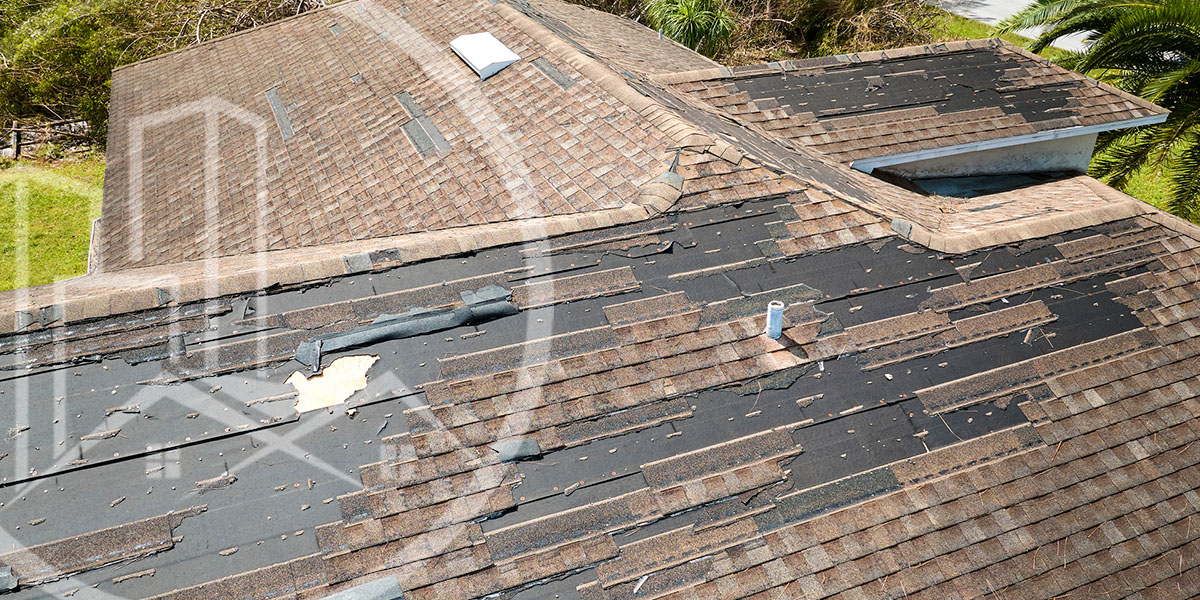
- Missing, cracked or curled shingles: These indicate storm impact damage and allow water penetration.
- Damaged vents and flashing: Check roof vents and flashing around chimneys for dents or displacement.
- Gutter damage: Look for detached, bent or torn sections. Damaged gutters can’t properly channel water away from your foundation.
Survey Foundation and Yard
Next, walk around your property’s perimeter and assess the landscape. Document where fallen trees or large branches struck structures, vehicles or your foundation.
Storms can shift soil and put pressure on foundation walls. Examine your foundation for new cracks or widening of existing cracks. Photograph these flaws and note their size.
Check other structures like fences, sheds and detached garages for damage to include in your claim.
Note Interior Damage and Leaks
Storm-related interior damage can be costly. Water intrusion can compromise structural elements and lead to mold growth, posing serious health risks.
Look for water stains on ceilings and walls, especially near windows. Also check for peeling or bubbling paint around window frames, which suggests water penetration behind the surface. In the attic and closets, be alert for dampness or musty smells, which indicate hidden moisture.
Understanding your water damage coverage helps you prioritize documentation.
What to Do Before Filing Your Claim
Once you’ve finished your inspection, don’t make these mistakes that can reduce your claim’s value.
Understand Temporary vs. Permanent Repairs
Part of your policy responsibility is preventing further damage. Quickly make stopgap repairs, such as tarping a hole in your roof or boarding up broken windows.
Do not permanently fix anything yet. Replacing your roof or windows before the adjuster arrives removes their ability to assess the full extent of the damage.
Save all receipts for temporary repairs and materials. These expenses are often reimbursable. Once your claim settles, you can start restoring your property.
The Value of Acting Quickly
Insurance policies have strict deadlines for reporting claims. Waiting too long to file could give your insurer grounds to deny coverage.
Start the claims process as soon as you complete your inspection. Acting fast shows you take your policy obligations seriously and establishes a clear timeline.
When to Call a Public Adjuster
If the storm damage is extensive, contact a licensed public adjuster before proceeding with your claim. These experts specialize in assessing property damage and negotiating insurance claims. They identify damage homeowners commonly overlook and value claims using the same methods insurance companies do.
These situations call for immediate professional help.
- Roof damage: Missing sections, shingle loss or visible sagging indicate structural issues that need experienced assessment.
- Multiple damage types: When your property has roof damage, foundation cracks and interior water intrusion, the claim becomes complex quickly.
- Structural concerns: Cracks in load-bearing walls, shifted foundations or compromised framing need professional evaluation to determine the full scope of damage.
- High-value claims: When damage exceeds $25,000, the stakes justify bringing in a professional who knows how to maximize your settlement.
- Uncertainty about coverage: If you’re unsure what your policy covers or how to document what happened, a public adjuster can guide you.
Insurance companies employ experienced adjusters to evaluate claims. Having a professional advocate levels the playing field for you and secures the maximum reimbursement for your property damage.
- Communication: They liaise directly with your insurance company on your behalf, taking stress off your shoulders.
- Maximized settlements: They secure the highest possible settlement for your situation.
- No up-front costs: Most work on contingency, getting paid only when you receive your settlement.
- Expert damage assessment: They find damage that untrained eyes might overlook.
- Your advocate: They work exclusively for you and your interests.
Get an Expert on Your Side With Performance Adjusting Public Insurance Adjusters
Inspecting and documenting your property in the aftermath of severe weather is the responsible thing to do. Insurance companies have experienced adjusters on their side for situations like these — so should you.
Performance Adjusting is here to help. We handle the claims process for you, assessing damage, negotiating settlements and dealing with your insurance company so you don’t have to. Our team spots damage you might miss and presents your claim to maximize your settlement.
We work for you, not the insurance company. Whether you’re filing a new claim or need help with an existing one, even if you’ve already received payment, we can help.
We’re available 24/7 at 401-724-9111. Contact us today for a free consultation.


